top of page


DSC05746_Brightened

DSC05797
DSC05808
DSC05746_Brightened
1/3
Philadelphia Film Center
1412 Chestnut Street
Philadelphia, PA 19102
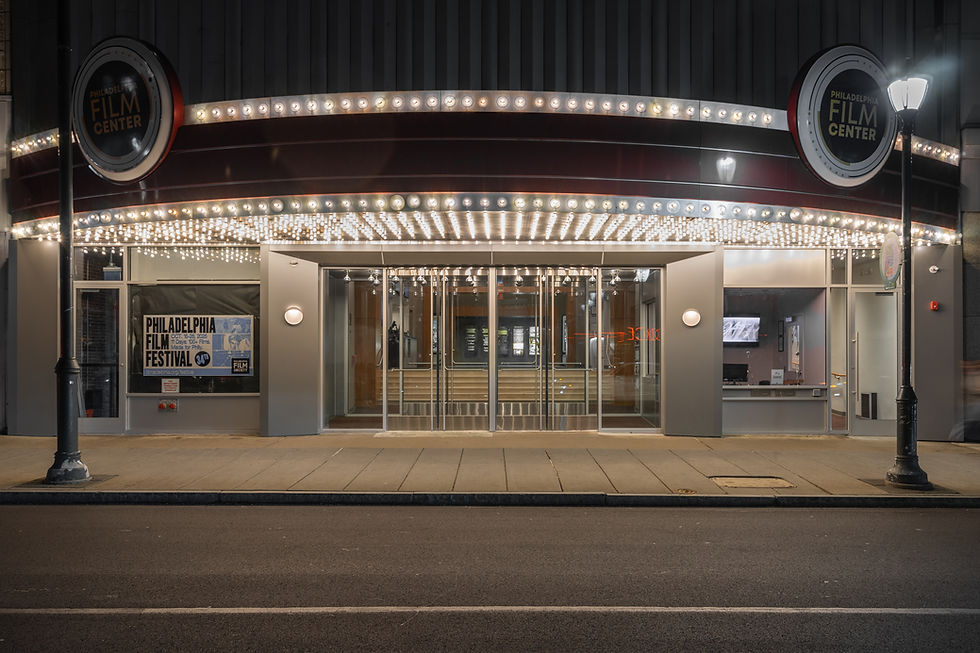
Since the 1920s, the Philadelphia Film Center—previously named The Karlton Theater and The Prince Theater—has served as a cultural hub in Center City, premiering films and hosting events for generations of Philadelphians. Today, the venue is undergoing a series of renovations that reinforce its identity as a film-focused institution. The scope includes upgrades to the façade, lobby, and concessions area.


The design team worked with the Film Center to expand concessions and kitchen capacity, improve accessibility, and open the building visually to the street. The new layout reorganizes the main lobby, ticketing office, concessions, kitchen, circulation, ADA ramp, and bar into a clear sequence from sidewalk to auditorium. Every move supports both operational needs and the energy of opening night.


One of the central technical challenges was inserting a fully code-compliant ADA ramp into the constraints of a historic building with complex existing structure. The new ramp is carefully integrated into the lobby architecture, doubling as a premium passage for main donors and VIP guests when needed, offering a more private and dignified route without feeling separated from the overall space.
Previously unused space behind the marquee is reclaimed and pulled into the lobby through a new sloped millwork ceiling. This gesture not only expands the public room but also opens direct views from the street into the life of the theater, allowing passersby to see events, gatherings, and the glow of the bar and concessions inside.


A key design idea is a choreographed progression of light and color: visitors move from the bright glow of the marquee and entrance into a dark-tone blue ceiling zone, before arriving in a deep, dark lobby that sets the mood for the theater beyond. These spaces are framed and divided by a large, warm wood opening that acts like a proscenium, marking the transition from city to cinema.
Together, these architectural, operational, and accessibility upgrades give the Philadelphia Film Center a modern, welcoming lobby that better serves its audiences while celebrating the experience of going to the movies.
bottom of page